

This year I decided to try something new. Even though I already have six raised beds, I purchased a Greenstalk five-tier vertical planter to see what all the buzz was about. I’ve recommended them to clients for small spaces, so I thought it was time I gave one a test run myself.
Since I don’t need all five tiers right now, I’ll only be planting in three of the “buckets” for my fall garden. I’ll be focusing on leafy greens and root vegetables — perfect choices for this time of year. The best part? If the weather turns too cold, I can even move the GreenStalk into my greenhouse.
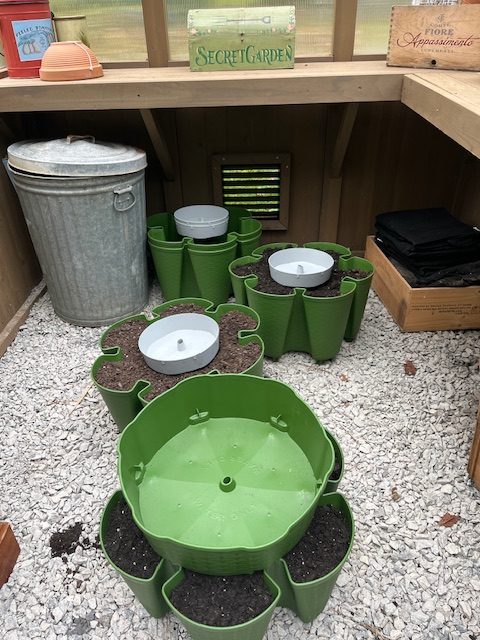
If you’re short on space but still want fresh vegetables, this could be an opportunity to grow your own.
Tips for Planting in a GreenStalk Planter
-
Great for Small Spaces – Perfect for sunny decks, porches, patios, or anywhere space is tight.
-
Move It to the Sun – Purchase the plant dolly separately so you can rotate or move the planter to follow sunlight throughout the day.
-
Cold Protection – A zip-up protector is available for chilly weather, making it easier to extend the season.
-
Self-Watering Design – Each tier has its own watering tray. Fill the top tray and water trickles down to each level through holes in the trays.
-
Soil Matters – Use potting soil for vegetables, not garden soil or raised bed soil (they’re too heavy). I mixed in extra worm castings for a nutrient boost.
-
Hand Water at First – When planting seeds or new transplants, hand water for a few days to keep the soil evenly moist. After that, the self-watering system does the work.
-
Plant Large Vegetables Low – Big plants like broccoli should go on the bottom tier (one per pocket) so they don’t shade out smaller plants above.
- Keep It Level- Be sure you place your planter on a level surface or the water will not be dispersed in the trays.
-
Accessories for Summer – Planning to grow vining vegetables like cucumbers or squash? Check out GreenStalk’s extra accessories to support them.
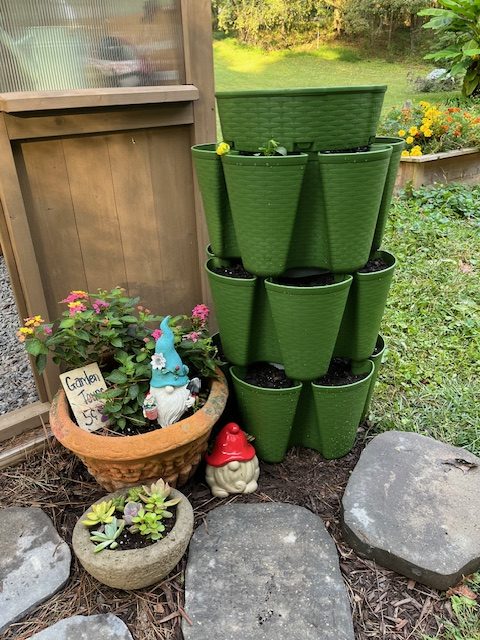
Even though I still rely on my raised beds, I’m already impressed with how versatile this GreenStalk planter is. I had 18 pockets in the 3 tiers and I planted:
- Burpee Baby Leaf Spinach
- Watermelon Radish
- Botanical Interest Bloomsdale Spinach
- Little Finger Carrot
- Red Cored Chantenay Carrot
In a GreenStalk planter, the number of seeds you plant per pocket depends on how big the mature plant will be and how much root space it needs. I planted the baby size carrots that grow about 6 inches long. Here’s a good guide for the ones I planted. I also added 2 pansy flowers, one in each pocket.
🥕 Carrots
- Plant 4–6 seeds per pocket
-
Thin to about 3–4 strong seedlings once they sprout. They’ll grow happily since carrots are slender and don’t need much space above ground.
🌱 Spinach
-
Plant 4–6 seeds per pocket as well.
-
Thin to 2–3 plants once seedlings are a few inches tall, or harvest as baby spinach by leaving them closer together.
🌸 Watermelon Radish
-
These get larger than carrots or spinach.
-
Plant 2–3 seeds per pocket, then thin to 1–2 plants once they start growing. That gives enough room for the roots to develop into good-sized radishes.
👉 Tip: Always plant 1–2 extra seeds per pocket (a “safety net”) because not every seed will germinate. Then thin to the healthiest seedlings for best results.
For those of you with limited space, it’s a fantastic way to grow fresh vegetables and herbs right outside your back door.
Imagine stepping onto your porch or patio to snip lettuce for a salad or grab a handful of parsley for dinner. With the GreenStalk planter, you don’t need a big backyard to enjoy the benefits of a homegrown harvest.
Happy Gardening
Karen