

When you’re planning your vegetable garden, it’s easy to focus on what you want to harvest—tomatoes, peppers, lettuce, cucumbers. But one of the simplest ways to grow a healthier, easier garden is often overlooked: adding herbs and flowers right into your vegetable beds.
Herbs and flowers don’t just add color. They help attract beneficial insects, support pollination, and naturally reduce pest pressure—all without extra work or sprays.

Why Herbs and Flowers Belong in Your Vegetable Garden
Herbs and flowers play an important role in a balanced garden. When they’re planted alongside vegetables, they help create an environment where nature works with you instead of against you.
They can help:
-
Attract beneficial insects that feed on common garden pests
-
Improve pollination for fruiting vegetables
-
Fill empty spaces in beds and along edges
-
Reduce the need for pest sprays
-
Make the garden a more enjoyable place to spend time
You don’t need a separate flower garden or a complicated plan. A few well-placed plants in each bed is enough to make a difference.

Easy Herbs to Add While Planning Your Garden
These herbs are simple to grow, fit easily into raised beds, and work well in vegetable gardens.
Basil
Basil grows well near tomatoes and peppers and attracts pollinators when it flowers. It’s easy to tuck into open spaces in garden beds—and you’ll love having fresh basil ready for meals.
Dill
Dill is a magnet for beneficial insects that help control pests. Let at least one plant flower and go to seed so those insects can do their job in your garden.
Chives
Chives are perfect for edging garden beds. Their flowers attract pollinators, repel pests and the plants stay compact, making them an easy addition even in small gardens.
Simple Flowers That Support a Healthier Garden
Flowers aren’t just pretty. These varieties work hard behind the scenes to attract pollinators, and beneficial insects while adding beauty to your garden.
Calendula
Calendula attracts beneficial insects and adds color to vegetable beds. It’s easy to grow and blends well with herbs and vegetables. If you make your own skin care products, Calendula infused in oil makes a great salve or lotion bar for hard working garden hands.

Sweet Alyssum
Sweet alyssum is one of the best flowers for vegetable gardens. It is one of my favorites and I plant it every year in each of my 6 beds. It stays low to the ground, fills gaps nicely, and attracts insects that help keep pest populations in check. You can purchase plants, or scatter seeds throughout the bed in early spring.
Nasturtium
Nasturtiums are great for planting along the edges of beds or letting spill over the sides. They help distract pests and also provide edible leaves and flowers. These nasturtiums were picked from my spring garden along with pretty blue borage flowers and added to a salad. Borage is actually an herb, and belongs in every garden to deter tomato hornworms.

Where to Plant Herbs and Flowers
You don’t need extra space to include garden allies. Try planting them:
-
Along the edges of raised beds
-
In corners where vegetables don’t quite fit
-
Near trellises or arches
-
In containers placed next to vegetable beds
Even adding a few plants per bed can improve the overall health of your garden.
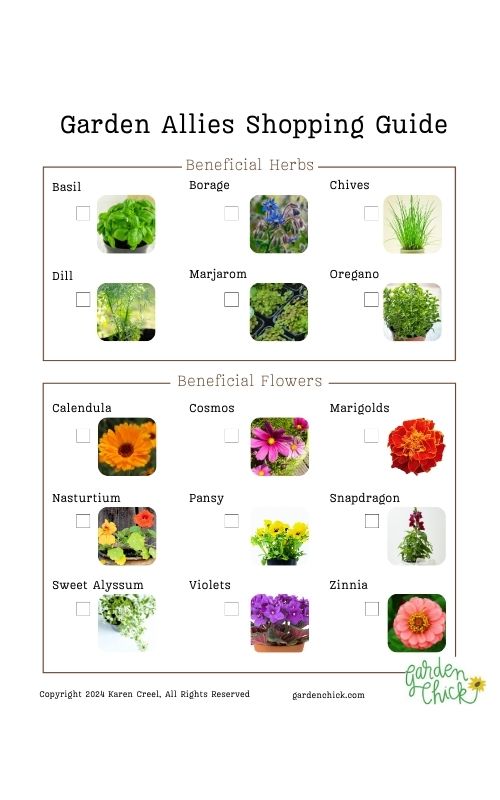
Download the Garden Allies Shopping Guide
To make garden planning easier, I’ve created a Garden Allies Shopping Guide you can download and take with you to the garden center. It includes a simple checklist of herbs and flowers that work well in vegetable gardens.
👉 Download the Garden Allies Shopping Guide here
Want to go a little deeper learning to create a garden that fights pest naturally for your?
My Garden Allies Guide and Pest Patrol Journal walks you through which herbs and flowers to plant, why they work, and how to use them to support a healthier, more balanced garden.
👉 Learn more about the Garden Allies Guide
Happy Gardening
Karen