

If you only think of dill as something for pickles or potato salad, you’re missing one of the easiest pest-control helpers you can grow in your vegetable garden.
I’ve been planting dill in my raised beds for several years now — not just for cooking, but because it quietly works behind the scenes protecting my vegetables.
And honestly? It might be one of the most underrated herbs in the garden.
Dill Is More Than a Culinary Herb
Yes, dill tastes great.
But what really makes it shine is what it attracts.

Those tall, umbrella-shaped flower heads are like landing pads for beneficial insects. When dill begins to bloom, it draws in ladybugs, hoverflies, and tiny parasitic wasps — the very insects that feed on aphids, caterpillars, and other soft-bodied pests.
Instead of reaching for pesticides (even organic ones), I let dill do what dill does best. It turns your vegetable garden into a welcoming place for the good bugs. And when the good bugs move in, the pest problems usually calm down.
Dill is a Cool Weather Herb:
Dill is a cool weather herb, which makes it perfect for early spring and fall gardens. You will start seeing it in the garden centers in early March or April, or you can start your seeds indoors.
It germinates easily in cooler soil and grows quickly. But once summer heat arrives, it will bolt — sending up tall flower stalks and going to seed.
Some gardeners see bolting as a problem.
But allow your dill to bolt, because those flowers are exactly what ladybugs and beneficial wasps are looking for.
When dill bolts, that’s when it becomes a magnet for your garden allies.
So instead of pulling it out when it flowers, I let it do it’s thing and stay in the garden until it has finished and dies back with a freeze.

Ladybugs and Beneficial Wasps: Your Silent Helpers
When aphids show up (and they usually do at some point), I don’t panic.
If I’ve planted dill, I know help is coming.
Ladybugs lay their eggs near aphid colonies. Their larvae eat even more aphids than the adults do. And those tiny parasitic wasps? They target caterpillars and other pests you’d rather not have chewing on your vegetables.
You may not even notice them working.
But they are.
And all they really need is a place to land and feed.
Dill provides that.
Where I Tuck Dill into My Garden
Dill can grow to 3 feet tall. I generally plant it at the back of the garden in between my vegetables. Dill will often self seed if you let it stay in the garden until winter, popping up again in the spring.
When you start interplanting herbs in your vegetable garden, you will start to notice your garden is different. After about 2 years, I noticed the parasitic wasp population had really increased, and I saw them placing their eggs into my “bug hotel” and mudding over the openings.
But most noticeably, I had fewer and fewer pests. This is the way you create a garden you can enjoy and don’t spend hours battling pests. It won’t happen overnight, give it a couple of seasons, and you will start seeing the good bugs start finding your garden.
Organic Pest Control Starts with Plants
If you’re tired of fighting aphids, caterpillars, or mystery leaf damage every season, don’t start with a spray.
Start with flowers and herbs that invite the right insects into your garden.
Dill is one of the easiest places to begin.
And it’s just one piece of a bigger strategy — one that uses nature instead of chemicals to keep your vegetables healthy.
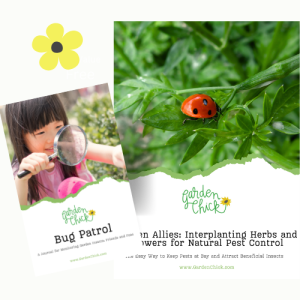
If you love the idea of letting ladybugs and beneficial wasps do the heavy lifting in your garden, I walk you through exactly how to do this in my Garden Allies guide.
Inside, I share:
• The best herbs and flowers to plant for organic pest control
• Which beneficial insects to watch for
• How to design your vegetable garden so it works with nature, not against it
And as a bonus, you’ll get the Bug Patrol Journal — a simple garden companion that helps you keep track of the good guys and the troublemakers.
You can record:
• What insects you’re seeing
• Where you spotted them
• Which plants they’re on
• What time of year they show up
Because when you start paying attention, you’ll realize your garden is full of activity — and not all bugs are pests.
👉 Download Garden Allies and start building a vegetable garden that works with nature instead of fighting
Happy Gardening!
Karen
Leave a Reply