

Are you preparing your garden for fall and wondering how to make the most of limited space? Grow bags are the perfect solution. Whether you have a backyard, balcony, or patio, grow bags let you plant cool-season vegetables without needing a lot of space. Even though I have 6 raised beds to grow in, I have used grow bags each year for my potatoes since they have to remain in the ground for a long period of time, taking up valuable garden space. They would also be perfect for growing garlic since they remain in the garden from around October to the next summer.
Why Grow Bags Are Perfect for Fall Gardening
Cool-season crops such as carrots, spinach, lettuce, kale, arugula, and Swiss chard don’t require the deep soil that summer crops like tomatoes and squash need. This makes them ideal candidates for grow bags, which typically range from 5–20 gallons in size.
The fabric material of grow bags allows for excellent drainage and air circulation—two things fall crops love. Plus, when the temperatures dip, you can move them to a sunnier spot or even close to your home for extra warmth and protection. (If you plan on moving, be sure you put them on a plant dolly since they can be heavy.)
Top Fall Vegetables to Grow in Bags
- Carrots – Root crops grow especially well in deep grow bags. Choose shorter varieties such as Nantes or Little Finger if your bags are shallow.
- Leafy Greens – Spinach, lettuce, kale, and arugula thrive in the cooler fall weather. You can harvest outer leaves regularly for a steady supply of salads.
- Radishes & Beets – Quick-growing and perfect for succession planting, giving you multiple harvests before frost.
- Herbs – Cilantro and parsley flourish in cooler weather and are easy to tuck into smaller grow bags.
Tips for Success with Fall Grow Bag Gardening
- Soil Refresh – If you’ve used the bags over summer, dump the old soil into your garden beds or compost pile. Start fresh with a good-quality raised bed growing mix enriched with compost.
- Spacing – Don’t overcrowd. Follow the seed packet spacing, but remember you can usually fit several plants in a single bag. I cheat a little on spacing and practice square foot gardening.
- Frost Protection – Keep frost cloth on hand. Even though many fall vegetables can tolerate a light frost, a simple cover will extend your harvest even longer.
- Succession Planting – Plant new seeds every 2–3 weeks for crops like lettuce, spinach, and radishes to keep fresh greens coming.
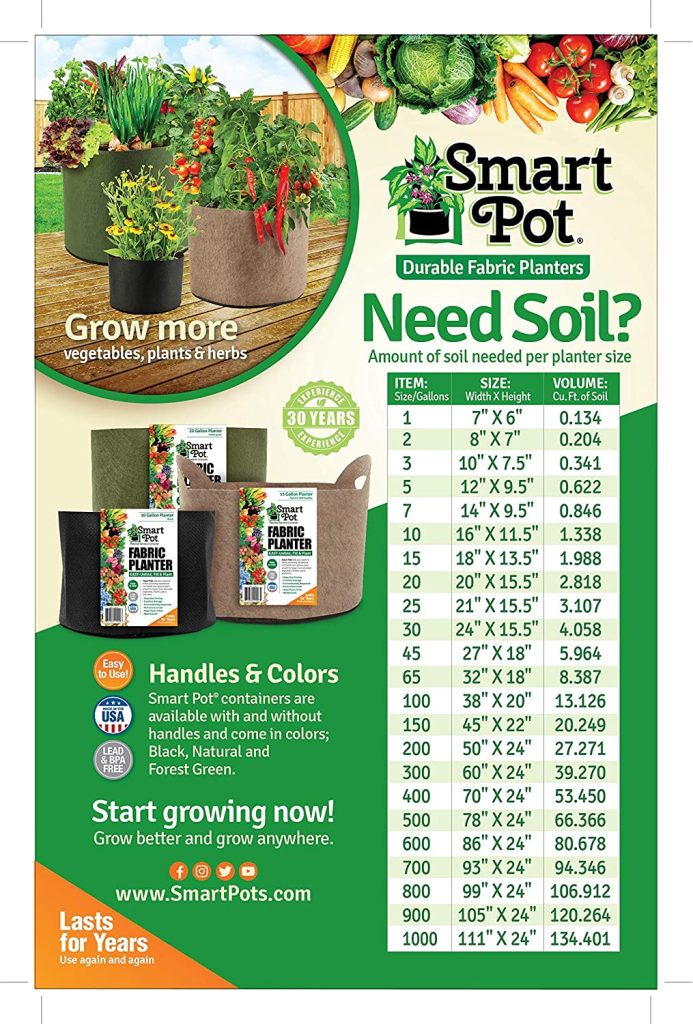
Bagged soil usually comes in 1, 1.75 and 2.0 cubic feet bags. This graphic works for any brand of grow bag. You can buy Smart Pots or other grow bags here.
Why You’ll Love Grow Bags This Fall
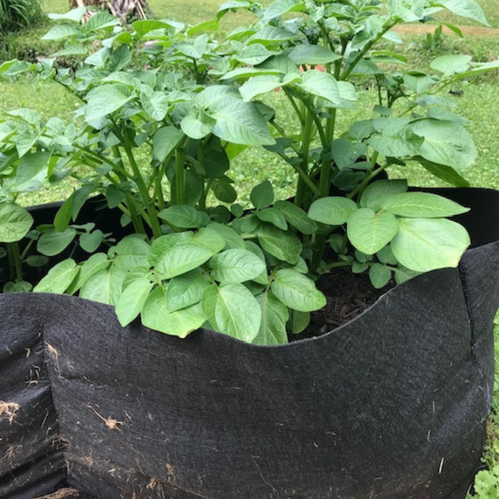
Not only do grow bags save space, but they also give you flexibility. You can group them together, line a walkway with them, or move them around to capture the best sunlight as the days grow shorter. And when the season is over, simply fold them up and store them away. No more excuses that you don’t have enough space to garden. My bags are just the simple square black ones but you can buy them in different colors to brighten up a sunny spot. These are my potatoes I planted in a grow bag this spring. I had a total of 4 bags.
Happy Fall Gardening,
Karen