

This is my first year growing Honeynut Winter Squash from Botanical Interests. The seed packet described it as a smaller, sweeter version of butternut—just 4–5 inches long—with edible skin that turns a warm terracotta color when ripe. It also said the vines were “compact” and suitable for containers or trellises, which sounded perfect for my raised bed garden.
But I’ll be honest—those vines weren’t what I’d call compact. I found out that “compact” on sprawling squash vines means 6 foot or less. They took off and spread out across the bed and beyond, making themselves right at home. Next year, I might try growing them up a trellis since the fruit is small and would hang just fine with minimal support.
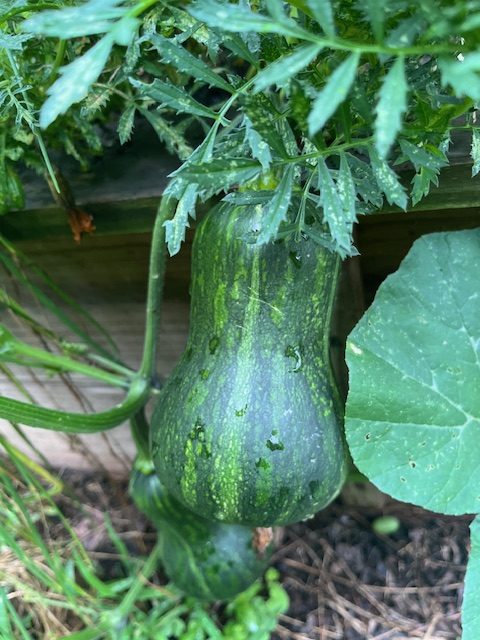
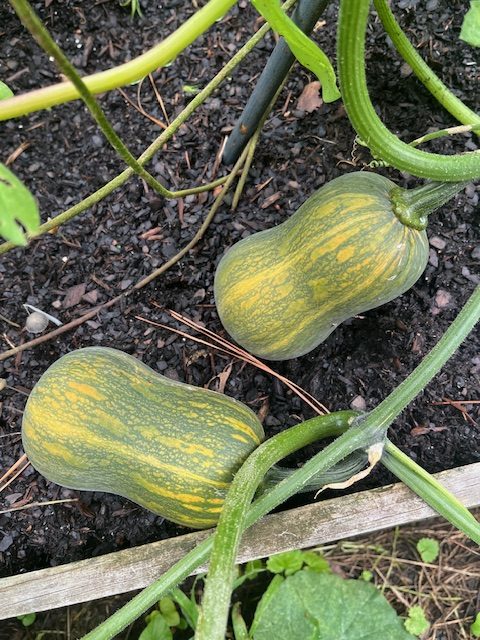
Despite the sprawl, I’m happy with how they’ve grown. The squash is starting to turn from green to that deep terracotta color that signals ripeness, and I’ll be sharing a picture soon from my garden.
✂️ Pro tip: Prune back some of the big leaves on your summer and winter squash plants. This helps the plant shift its energy into ripening fruit during these final weeks of the season.
What’s the Difference Between Summer and Winter Squash?
If you’re wondering why this is called winter squash even though it’s grown in the summer, you’re not alone.
-
Summer squash—like zucchini or yellow crookneck—is harvested young, while the skin is still soft and the seeds are small. It doesn’t store long and is best eaten fresh.
-
Winter squash—like butternut, acorn, or this Honeynut—is left on the vine to fully mature. It develops a hard rind and stores well into the cooler months.
So while I planted these in early summer, I’ll be enjoying them well into fall—if they last that long in my kitchen.
How to Harvest and Store Honeynut Squash
Once the squash has turned from green to a deep orange-brown and the skin feels firm, it’s ready to harvest. I like to leave about 2–3 inches of stem when I cut them from the vine. Then, I let them cure for about 10 days in a warm, dry spot to help the flavor develop and improve storage life.
After curing, they can be stored in a cool, dry place like a pantry, basement, or even a spare room. No need to refrigerate unless you’ve already cut them open.
A Simple Roasted Honeynut Recipe
One of the easiest—and tastiest—ways to enjoy Honeynut squash is roasted:
Roasted Honeynut Squash Halves
-
Cut the squash in half lengthwise and scoop out the seeds.
-
Drizzle with olive oil and sprinkle with salt and pepper.
-
Roast at 400°F, cut side up, for about 25–30 minutes or until tender and lightly caramelized.
-
You can add a pinch of cinnamon or a drizzle of maple syrup if you like a sweeter flavor.
Serve it as a side dish or scoop out the flesh and mash it with a little butter.
Happy Gardening
Karen