

Today’s weather was so pretty, I wanted to get out and finish cleaning up in my yard after the freeze we had a week ago. The annual potted flowers had finally given up after the hard freeze, and it was time to shift from summer color to winter garden cleanup. I’ll admit. It was a little sad looking at all those dead flowers that were so pretty during the summer.
If you are wondering, what should I do with all, those pots and can I reuse the soil next spring the answer is yes. With a few simple steps you can clean up, store your containers and save a little money and time next year when the garden center will be overflowing with spring annuals.
Step 1: Remove the Spent Flowers
Go ahead and pull out the dead annuals. Shake off as much soil from the roots as you can right back into the pot. Toss the plants into your compost pile (unless they had disease — if so, bag and trash those).
Step 2: Can You Reuse the Potting Soil?
Yes — you CAN reuse potting soil, but it needs a little refresh. After a full season of growing, nutrients are depleted and the texture can become compacted. Reusing it “as-is” will lead to poor results next year, especially for vegetables, herbs, or flowers that need loose, nutrient-rich soil.
Here’s what to do:
How to Refresh Used Potting Soil
Next spring, before planting:
-
Remove old roots and any leftover mulch.
- Mix the old soil 50/50 with:
-fresh potting soil
-AND a scoop or two of compost
3.Add a handful of slow-release organic fertilizer. I had bone meal in the greenhouse, so I added that. Bone meal adds phosphorus and that is good for blooming plants.
This freshens the nutrients and opens up the texture again so that your plants start the season strong.
If the soil in any pot had disease, pests, or fungus (like powdery mildew, root rot, or fungus gnats), don’t reuse it. Dump it in a spot away from your garden.
Step 3: Store the Soil Over Winter
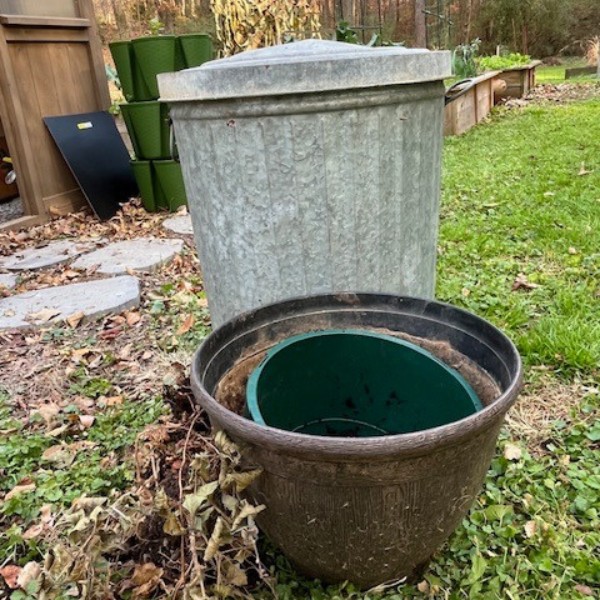
Last year I found a big, galvanized garbage can with a lid that I stored in my greenhouse. I placed all the used soil in it and dumped in half a bag of potting soil that was left over from the summer. Next, I added a scoop of compost. You can keep the soil right in the pot over winter — just make sure it stays dry. Wet soil in a container can expand when it freezes and crack your pots. I didn’t want to store those heavy pots so I chose to empty. If you choose to keep the soil in the container move the pots under a porch, carport, or inside a shed.
For large ceramic or terra-cotta pots, you should scoop out the soil and store separately to reduce weight and prevent cracking.
Step 4: Clean Your Pots Before Storing Them
Cleaning prevents disease from carrying over to next year’s plants. It also keeps your pots looking good — especially terra cotta and ceramic pots that can develop salt or fertilizer buildup.
How to Clean Plastic Pots
-
Dump out any remaining soil.
-
Use warm, soapy water and a scrub brush.
-
Rinse well.
-
Disinfect with a solution of 1 part bleach to 9 parts water if you had disease.
How to Clean Ceramic Pots
-
Clean the same way as plastic.
-
If you see white mineral deposits, soak the pot in vinegar and water to dissolve buildup.
-
Rinse and let dry completely.
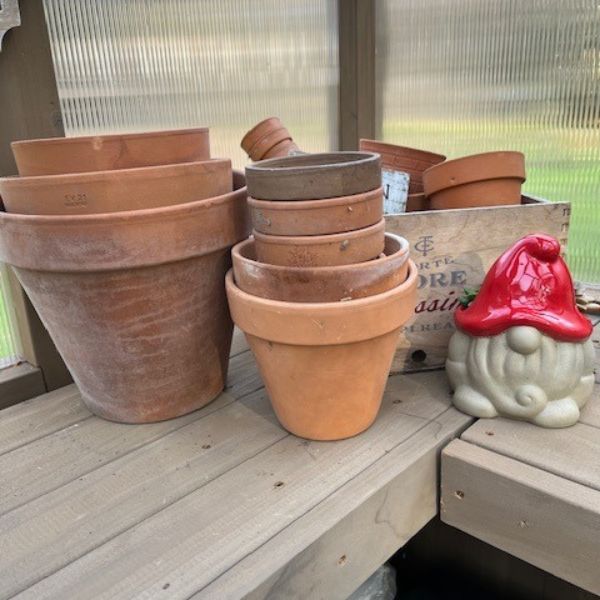
How to Clean Terra Cotta Pots
Terra cotta absorbs moisture — which means it can crack if stored wet in freezing temperatures.
-
Scrub with warm, soapy water.
-
Soak in a vinegar solution to remove mineral stains.
-
Let them dry completely — ideally several days in a warm, dry spot.
-
Store indoors, in a shed, or in your garage.
Step 5: Store Pots So They Last Longer
Different materials handle winter differently:
Plastic Pots
-
Lightweight, durable, and frost-safe.
-
Stack and store anywhere — garage, shed, porch.
Ceramic Pots
-
These can crack if left outdoors full of wet soil.
-
Bring inside or store in a frost-free spot.
-
If they must stay outside, empty them and turn upside down.
Terra Cotta Pots
-
Most fragile in winter.
-
Must be stored indoors and dry.
-
Best kept stacked in a garage or shed where they won’t freeze.
Cleaning up your pots now means one less thing on your list when spring planting rolls around. And by saving and refreshing your potting soil, you’re being thrifty and giving your next round of flowers or vegetables a healthy start.
Until Spring
Karen