

Your growing season is basically the window of time each year when plants can grow outside without getting zapped by frost.
Technically, it starts after your last frost in spring and ends when the first frost shows up in fall. That frost-free stretch is what most people mean when they talk about their growing season.
But here’s the good news.
You can actually stretch that season a bit.
Certain cool-season vegetables—like lettuce, spinach, peas, and radishes—can be planted a few weeks before your last frost. They don’t just tolerate chilly weather… they prefer it.
So while your official growing season is based on frost dates, your real growing season can start earlier if you take advantage of those cool-season crops.
Some gardeners have a long season; some have a shorter one. Neither is good or bad—it just means you plan a little differently and use the season you have wisely.
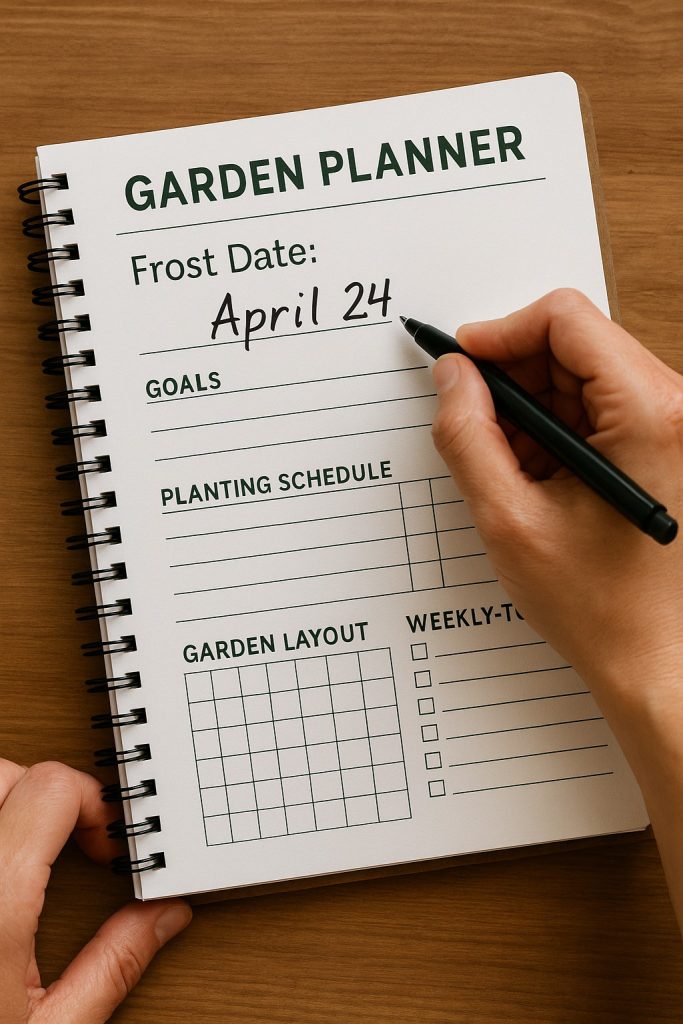
How Do You Figure Out Your Growing Season?
This part is easier than it sounds.
All you need to do is look up two dates.
Go to Google and type in:
-
“Last frost date + your town or zip code”
-
“First frost date + your town or zip code”
Those dates don’t have to be exact to the day. They’re meant to give you a solid planning guide — not something to stress over.
Once you have those two dates, the time in between is your growing season. (Plus a few weeks before if you are planting a spring garden with cool season, frost tolerant vegetables and herbs)

Why This Matters:
Every plant needs time to grow.
Seed packets usually tell you how many days it takes for that plant to mature. If your growing season is shorter than that number, or you will have a frost before frost shows up again, don’t plant it.
Knowing your growing season helps you:
-
Pick plants that actually make sense for your area
-
Plant at the right time instead of guessing
-
Avoid that “why didn’t this work?” feeling later
It’s not about following rules — it’s about setting yourself up for success.
If your growing season is shorter, you’ll want to:
-
Lean toward quicker-growing vegetables. Look at the seed packets or transplants tags and choose the quicker maturing variety.
-
Use transplants for slower crops
If your growing season is longer:
-
You have more flexibility
-
You can use succession planting to spread your planting over a period of time.
-
Fall gardens become an option
Either way, once you know your season, you stop trying to grow everything and start growing what actually works.
Gardening is easier when you don’t have to do it alone.
The No-Fuss Garden Course gives you a clear plan and quarterly coaching so you can ask questions, get unstuck, and feel supported through every season of your garden.
👉 Come grow with me inside the No-Fuss Garden Course
Leave a Reply